Everyday English: role-plays students can use this week
Written by Shari Chung, an English teacher who teaches one-to-one online and uses these games in her own lessons.
Textbook situations often have nothing to do with a student's real life. Ladder Lessons has a set of everyday English games built around things students actually need to say: giving directions when a friend calls lost, ordering food at a café or on the phone, seeing a doctor or calling in sick, telling the time, and explaining their own festival to a friend. Several have separate Kids and Adults versions.
Learn first, then practise from small to full
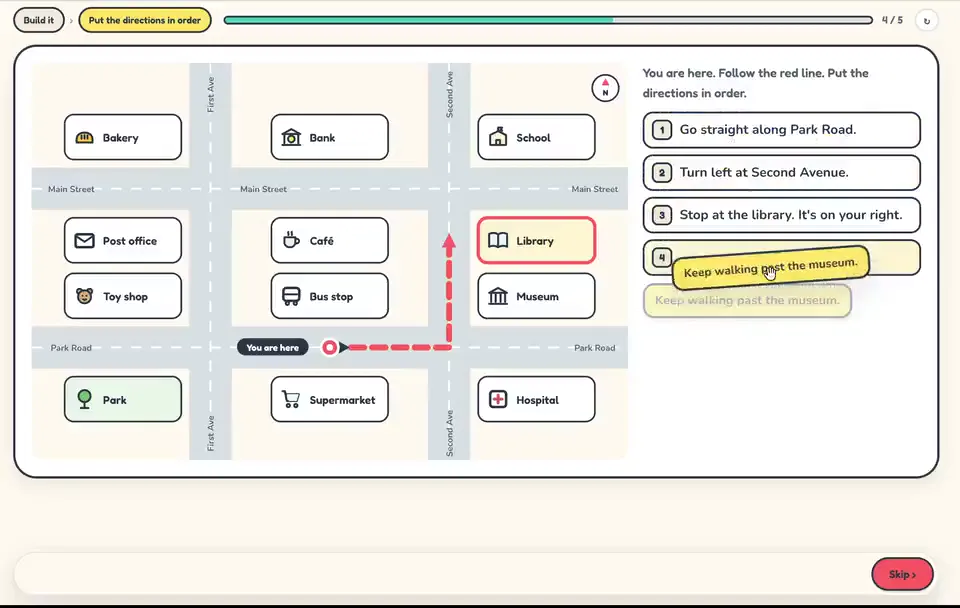
Each game separates Learn from Practise. Follow the Directions starts with the position and movement words, then moves up in steps on one town map: where is it, which way, follow the directions, put them in order, and finally help a friend who calls you lost.
The map is the centre of the screen share, and every map has a You are here pin.
The goal is a real skill
The test is simple: could the student do this outside the lesson? For directions that means a phone call: ask where your friend is, what they can see, which way to face, and how they will know they have arrived.
Order Up walks the whole journey from the door to the bill: a café counter, a restaurant, ordering delivery and booking a table on the phone, then a role-play with you as the waiter.
Kids and adults need different words
An adult does not need the same scene as a seven-year-old. Clinic Day has a Kids set (tell Mum, see the doctor, ask for leave) and an Adults set (book by phone, see the GP, call in sick, ask the pharmacist). The word cards are grouped into symptoms, illnesses, feelings, and how bad and how long, so headache and worried are never mixed up as the same kind of word.
Festivals, every year
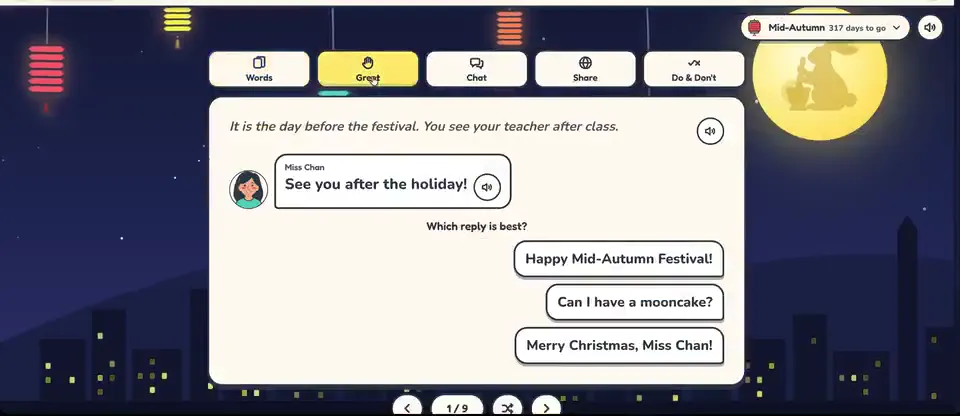
Ladder Festivals opens on the next festival. It covers the words, greetings, small talk about this year and last, explaining their own festival to a friend, and should or shouldn't.
One phone call from Follow the Directions
- Friend: “I'm lost. I'm at the station but I can't find the library.”
- Student: “What can you see?”
- Friend: “There's a big bank in front of me.”
- Student: “OK. Face the bank and turn left. Go straight for two blocks.”
- Student: “The library is next to the park, on your right. You'll see a red door.”
- You play the friend. The student guides you on the map until you reach the pin.
Games for this
- Everyday English · Paid plansFollow the Directions
Students learn to give real directions, like helping a lost friend on the phone. Learn the words, then five steps on one town map: where is it, which way, follow, put in order, and the phone call. Every map has a You are here pin. - Everyday English · Teacher planOrder Up
Order food and pay in English, from the door to the bill: café counter, restaurant, delivery and booking by phone. Hide the choices so the student says it first, work out the money, then role-play with you as the waiter. UK or US words. - Everyday English · Paid plansClinic Day: I Don’t Feel Well
Say what's wrong and get help. Kids: tell Mum, see the doctor, ask for leave. Adults: book by phone, see the GP, call in sick, ask the pharmacist. Wrong choices get a hint, never a penalty. - Everyday English · FreeTelling the Time
Drag the hands and the words change with them. Switch between Simple and Traditional ways of saying the time to match their school. Paid plans add real life: almost three, just after four, and 12 role-plays for making plans. - Speaking · Paid plansLadder Festivals
Opens on the next festival: words, greetings, small talk about this year and last, and explaining their own festival to a friend. Three answer levels, so it works again every year. - Speaking · Paid plansFestival Speaking Builder
Nine festivals, five modes, ending in rapid fire. Students write the sentence right before they say it, and you can change level or mode mid-game. - Everyday English · Paid plansHealthy Living Challenge
Sort 14 daily habits into healthy or unhealthy, then give advice in pairs: one should and one shouldn't for every situation. - Everyday English · Paid plansCommunity Helpers
The problem comes first, then who can help, so students learn why each job matters, not just its name. 13 helpers over 9 levels, UK or US words. - Listening · Paid plansAnnouncement Station
Real-world listening: school, station, airport, supermarket and library announcements. Wrong answers point to the exact line that held the answer. - Listening · Paid plansNumber Ninja
13 or 30? Prices, times, dates and long numbers, where one wrong sound changes the whole answer. - Everyday English · Paid plansKids’ Toy Shop
Run the shop for a day: six customers, buying stock, upselling and talking price in English before they make any money.
Free to try today
Telling the Time is free: drag the clock hands and the words change with them, in the Simple or Traditional way of saying the time.
See all 60+ games See the plans
Common questions
Are these only for children?
No. Order Up, Clinic Day's Adults set and Announcement Station work well with adults. Clinic Day switches between Kids and Adults in one tap.
Which situations are covered?
Directions, ordering food and booking a table, seeing a doctor and calling in sick, telling the time and making plans, festivals, healthy habits, community helpers, public announcements, numbers and prices, and running a shop.
Do I need to prepare role-play cards?
No. The situations, task cards and word cards are in the game. You play the other person.